Finding a company that hires foreign workers in the USA is not something you should do blindly. Many people search online, see job titles with big salary promises, and rush to apply without checking if the company is real, if the job is active, or if the employer is allowed to support foreign workers.
The truth is simple. Some U.S. employers hire foreign workers, but not every company does. Some companies hire only people who already have permission to work in the United States. Some may hire foreign workers only for seasonal jobs. Some may support skilled workers, while others may use temporary worker programs for farm work, hotel work, landscaping, seafood processing, construction support, and other seasonal jobs.
This guide will show you how to find companies that may hire foreign workers in the USA in 2026, the places to check, the warning signs to avoid, and the simple steps to follow before sending your application.
Why You Must Search Carefully
A lot of fake job adverts online use words like “free visa,” “USA sponsorship,” “urgent workers needed,” or “no experience required.” Some of them may look real, but their goal is to collect money from people.
This is why you must not depend only on social media posts, WhatsApp messages, or random job screenshots. A serious applicant should check official sources, company career pages, employer details, job requirements, and visa information before applying.
A real U.S. employer will usually have a company name, job description, work location, job duties, pay details, contact method, and a clear application process. If the job is connected to a temporary worker program, there should also be official steps the employer must follow.
Understand What “Hiring Foreign Workers” Means
When people say a company hires foreign workers, it can mean different things.
Some companies hire foreign workers who are already in the United States and already have work authorization. Some companies hire foreign workers from outside the USA through temporary worker programs. Some companies sponsor workers for longer-term employment-based immigration. Some companies recruit international students after study, but that is a different route.
So before applying, you should ask yourself one question:
Is this company only hiring people already allowed to work in the USA, or can it support foreign applicants from outside the USA?
This question matters because many job listings on U.S. job websites are not open to people outside the country. Some employers will even ask, “Are you authorized to work in the United States?” You must answer honestly.
Start With Official Seasonal Job Listings
One of the best places to begin your search is the official U.S. Department of Labor seasonal jobs website. The site is used for temporary and seasonal job listings connected to foreign labor programs. You can search by occupation, job title, industry, employer name, case number, city, state, or ZIP code.
This is useful because it helps you see real employers, real job locations, and active seasonal job openings. You may find jobs in farming, landscaping, hospitality, seafood processing, construction support, food processing, and other seasonal industries.
When checking a listing, pay attention to the employer name, number of workers needed, job duties, work location, wage, start date, end date, and how to apply. Do not just look at the title. Read the full listing carefully.
Look at H-2A Agricultural Employers
The H-2A program is for temporary agricultural work. According to USCIS, the program allows U.S. employers or U.S. agents who meet the rules to bring foreign nationals to the United States to fill temporary agricultural jobs.
This type of work may include farm labor, crop harvesting, planting, packing, livestock support, nursery work, and other agricultural duties. It is not a university-degree type of job, but it can be physically demanding.
If you are looking for farm-related work, focus on employers with clear agricultural job listings. Check if the job is seasonal, where it is located, how long it will last, and what the employer provides. Some H-2A jobs may include housing and transport rules, but you must read the details carefully.
Look at H-2B Non-Agricultural Employers
The H-2B program is for temporary non-agricultural work. USCIS explains that this program allows U.S. employers or agents who meet the requirements to bring foreign nationals to the United States to fill temporary non-agricultural jobs.
This can include jobs in landscaping, hotel and resort work, cleaning, amusement parks, seafood processing, construction support, restaurants, tourism, and other seasonal businesses.
But there is something important to know. H-2B has limits and high demand. USCIS updates cap information, and the availability can change during the year. For 2026, USCIS has published updates about H-2B cap counts and supplemental visa allocations, so applicants must always check current information before trusting any advert.
Use Department of Labor Data to Research Employers
The U.S. Department of Labor’s Office of Foreign Labor Certification publishes public disclosure data and selected statistics from employer applications across programs like PERM, H-2A, H-2B, H-1B, and others. In May 2026, OFLC released public disclosure data and selected program statistics for the second quarter of fiscal year 2026.
This type of data can help you see employers that have used foreign labor programs before. It does not mean they are currently hiring you, and it does not mean they will sponsor every applicant. But it can help you understand which industries and employers have used these programs.
For a beginner, this may look technical at first. But the idea is simple. Instead of applying to random companies, you can research employers that have a history of filing foreign labor applications.
Search Company Career Pages Directly
After finding a company name from an official listing or trusted source, search for the company’s own website. Go to the career page and check if the same job is listed there.
A real company website usually has an “About” page, contact details, business address, job section, and proper email domain. For example, a real company email may look like a company domain email, not only a free Gmail or Yahoo address.
This does not mean every Gmail job contact is fake, but you must be more careful when the whole process happens only through WhatsApp or a personal email.
When checking a company career page, look for:
Job title
Work location
Job duties
Pay range or wage information
Employment type
Experience needed
Application method
Company contact details
Whether the role is temporary, seasonal, full-time, or part-time
Do not apply only because the title says “foreign workers needed.” Read everything.
Best Industries to Research in 2026
Some industries are more likely to have temporary, seasonal, or entry-level jobs. This does not mean they will automatically sponsor foreign workers, but they are good areas to research.
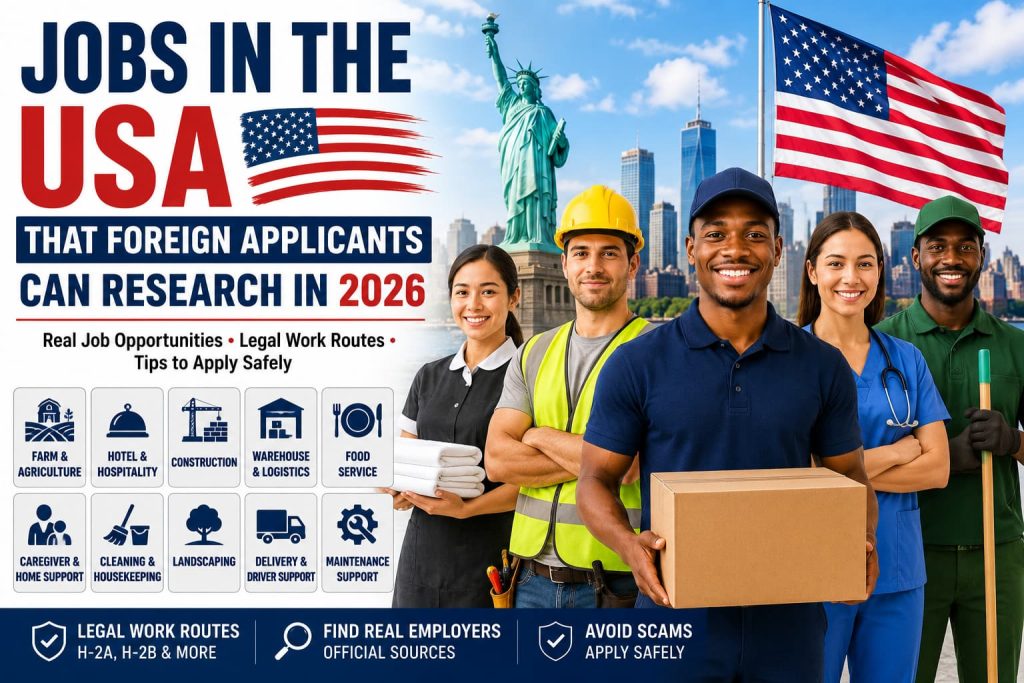
Agriculture is one of the strongest areas because of H-2A. Farms, nurseries, fruit growers, vegetable growers, and packing operations may need seasonal workers.
Hospitality is another area to watch. Hotels, resorts, restaurants, cleaning companies, amusement parks, and tourism businesses may hire seasonal workers, especially in busy periods.
Landscaping and grounds maintenance can also have seasonal openings, especially under H-2B. Seafood processing, food processing, warehouse support, construction support, and cleaning services can also appear in temporary worker listings.
Care work and home support jobs are also popular among foreign applicants, but you must be careful. Not every caregiving job comes with sponsorship. Many care jobs require background checks, training, certificates, state rules, and legal work authorization.
How to Know If a Company May Support Foreign Workers
There is no perfect shortcut, but there are signs you can check.
A company may be more likely to support foreign workers if it appears on official seasonal job listings, has filed foreign labor applications before, clearly mentions temporary worker recruitment, gives proper employer details, and explains the application process clearly.
A company may be less likely to support foreign workers if the job post says applicants must already be authorized to work in the USA, if there is no mention of visa support, or if the company only hires local workers.
This is why you should not waste time applying randomly to every job. Focus on employers and job types where foreign hiring is more realistic.
Be Careful With “No Degree” Job Claims
Many entry-level and seasonal jobs in the USA do not require a university degree. But no degree does not mean no requirements.
An employer may still require experience, physical strength, English communication, a clean record, a valid passport, previous work history, training, references, or the ability to work long hours.
For example, farm work can be physically hard. Hotel work may require cleaning speed and customer service. Landscaping may require outdoor work in different weather conditions. Care work may require patience, training, and background checks.
So when you apply, do not only say, “I need any job.” Show the employer what kind of work you can do.
Prepare a Simple CV Before Applying
Your CV should be simple, honest, and focused on the job you want. If you want farm work, mention any farming, harvesting, packing, or physical outdoor work you have done. If you want hotel work, mention cleaning, laundry, customer service, restaurant work, or housekeeping experience. If you want construction support, mention site work, tools, lifting, safety knowledge, or labor experience.
Do not write fake experience. Do not claim a degree you do not have. Do not use another person’s certificate. Fake documents can cause visa refusal, job loss, or a future ban.
A good CV should include your name, contact details, country, work experience, skills, education level, training, language ability, and references if available.
Write a Simple Application Message
When contacting a company, keep your message short and clear. Do not beg. Do not write too much. Mention the job title, your experience, and ask how to apply.
Example:
Good day. I saw your job listing for hotel housekeeping workers. I have experience in cleaning, laundry support, and customer service. I am interested in applying and would like to know the proper application process. Please let me know if foreign applicants can apply.
This sounds better than sending messages like “Please help me travel to USA” or “I need sponsorship urgently.” Employers want workers, not confusion.
Avoid Fake Agents and Fake Job Offers
A fake job offer may ask you to pay quickly before you can verify the employer. It may promise guaranteed visa approval. It may avoid giving company details. It may use fake documents. It may tell you not to contact the company. It may pressure you with words like “last chance” or “only 2 slots left.”
Be careful if someone says you must pay for an offer letter before you can see the employer information. Also be careful if the salary looks too high for the type of work.
A real process should allow you to verify the employer and understand the steps. For temporary worker visas, the employer usually has important official steps before the worker applies for a visa.
Check the Job Against Official Visa Information
Before you believe any job offer, check the visa type mentioned. If it says H-2A, read official H-2A information. If it says H-2B, read official H-2B information. If it says EB-3, understand that EB-3 is a different and longer employment-based process.
Do not allow anyone to confuse you with fake visa names. Some scammers invent visa categories or use real visa names in the wrong way.
Also, remember that a job offer and a visa approval are not the same. A company may offer a job, but the visa process still depends on official rules and approval.
What to Do Before You Apply
Before applying to a company, do these checks.
Search the company name online.
Check if the company has a real website.
Check if the job appears on an official or trusted source.
Read the full job duties and requirements.
Check if the company has a real address.
Avoid paying money without verification.
Confirm the visa type if sponsorship is mentioned.
Use only honest documents.
Keep copies of all messages and application details.
This simple check can save you from many fake offers.
Simple 2026 Plan for Finding Companies
Start by choosing the type of work you can do. Do not apply for farm work, caregiving, construction, hotel work, and remote work all at the same time with the same CV. Choose one or two areas and prepare properly.
After that, search official seasonal job listings. Save employer names. Visit their websites. Check their career pages. Search their company name together with words like “H-2A,” “H-2B,” “seasonal jobs,” or “foreign workers.” Then apply only through proper channels.
You can also keep a simple record of companies you contact. Write the company name, job title, date you applied, contact email, and response. This will help you stay organized.
Final Advice
Finding companies that hire foreign workers in the USA in 2026 is possible, but you must be careful and patient. Do not follow every online advert. Do not trust every agent. Do not pay money because someone promised quick visa approval.
Start with official sources, research employers properly, prepare a clean CV, and apply to jobs that match your real skills. A serious applicant who checks details carefully has a better chance of avoiding scams and finding real opportunities.
The safest way is to treat every job offer as something you must verify before you believe it. Real opportunities exist, but careful research is what protects you.